Autism Spectrum Disorder (ASD) is a neurodevelopmental condition that affects communication, sensory processing, social interaction, and behaviour. A significant number of individuals on the spectrum also experience functional vision difficulties that are frequently undetected and can contribute to behavioural challenges, learning difficulties, and sensory overload.
Common visual difficulties in autism include poor visual attention and eye tracking, difficulty maintaining eye contact due to visual discomfort rather than social avoidance, hypersensitivity to light and visual stimuli, poor visual-motor integration affecting handwriting and coordination, difficulty interpreting spatial relationships and depth perception, and inefficient central and peripheral vision balance.
Because many autistic individuals struggle to articulate visual symptoms, these difficulties often go unrecognised. A comprehensive Functional Vision Evaluation at Caring Vision Therapy assesses all aspects of visual function beyond basic eye health, identifying the visual processing differences that may be compounding sensory and learning challenges.
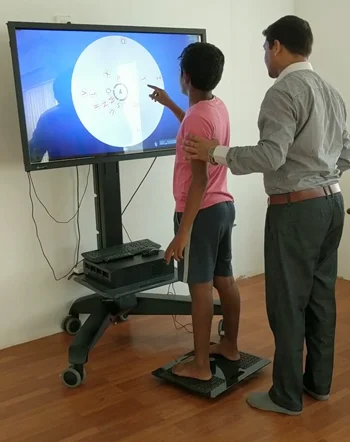
Vision therapy for autism does not treat the condition itself but provides structured, evidence-based intervention to improve visual efficiency, reduce visual stress, and develop visual processing skills. Treatment may include optometric syntonics phototherapy to regulate neurological responses to light, visual tracking and coordination exercises, sensory integration strategies, ambient prism lenses to improve spatial grounding, and primitive reflex integration where indicated.
At Caring Vision Therapy, all programmes are designed to be sensory-friendly, individually paced, and closely coordinated with families, occupational therapists, and educational specialists. Our goal is to address the visual component of ASD as part of a holistic, multidisciplinary approach that improves daily function, learning, and quality of life.